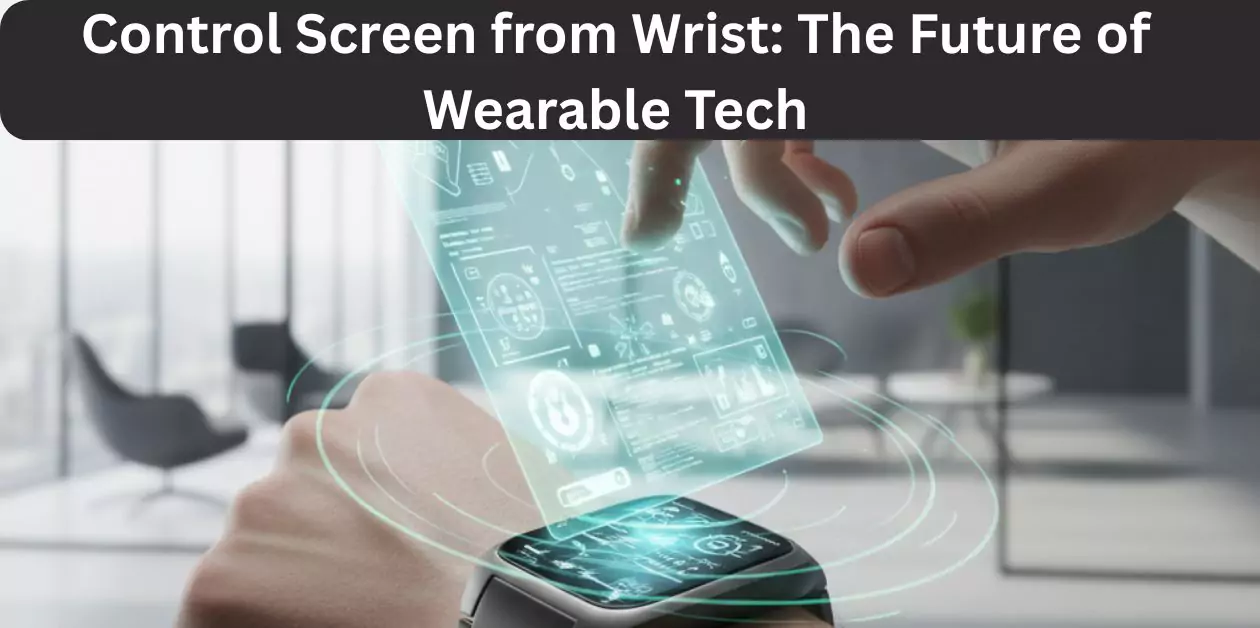
Imagine controlling your screen from your wrist—no phone needed! Discover the exciting innovations making this a reality and what it means for your daily life.
Ever wished you could manage your digital world without constantly pulling out your phone? Imagine controlling your screen from your wrist, a gesture away from what you need. This isn’t just science fiction anymore; it’s rapidly becoming a reality, revolutionizing how we interact with technology. This shift toward wrist-based control promises convenience, efficiency, and a truly seamless digital experience. Let’s dive into how this exciting innovation is changing the game.
The Dawn of Wrist-Controlled Interfaces
For years, smartwatches have been great for notifications and quick health checks. But the idea of full control screen from wrist capabilities—where your smartwatch acts as the primary interface for various devices—is a significant leap. Think about it: a quick flick of your wrist, a subtle hand gesture, and you’re navigating menus, controlling smart home devices, or even engaging with augmented reality applications. This level of integration streamlines our daily routines, making interactions quicker and more intuitive.
How Does “Control Screen From Wrist” Actually Work?
This futuristic control relies on a blend of advanced sensors, sophisticated software, and often, projected or holographic displays.
- Gesture Recognition: Many smartwatches already track basic gestures. Next-gen devices are incorporating more precise motion sensors and even electromyography (EMG) sensors that detect muscle movements, allowing for more complex and accurate gesture commands.
- Haptic Feedback: When you interact with a projected screen, haptic feedback on your wrist can simulate the sensation of touching a real button or surface, enhancing the user experience.
- Connectivity: Seamless Bluetooth and Wi-Fi connectivity allow your wrist device to communicate with a multitude of other screens and smart devices around you.
I recall a demonstration a few years back where a prototype allowed me to literally “draw” in the air with my finger, and the lines appeared on a nearby tablet. The potential for creative and productive tasks using this method is truly mind-blowing.
Beyond the Smartwatch: A Hub for Your Digital Life
The vision for control screen from wrist extends far beyond merely mirroring your phone. Your wrist could become a central command center for:
- Smart Homes: Adjusting lights, thermostats, or security cameras with a simple wrist gesture.
- Presentations: Navigating slides during a business meeting without needing a clicker.
- Entertainment: Controlling music, videos, or even gaming on larger displays.
- Augmented Reality (AR) & Virtual Reality (VR): Interacting with digital overlays in your environment or navigating virtual worlds more naturally.
This integration fosters an ecosystem where your wearable becomes the universal remote for your entire connected world. It’s about reducing friction and making technology feel like an extension of yourself.
The Benefits of Wrist-Based Interaction
Embracing the ability to control screen from wrist brings several compelling advantages:
- Convenience: No more fumbling for your phone. Everything is accessible directly from your wrist.
- Discretion: Perform actions subtly in public without drawing attention to your phone.
- Efficiency: Quicker access to functions can save valuable time throughout your day.
- Accessibility: Offers new ways for individuals with mobility challenges to interact with technology.
- Hands-Free Operation: Keep your hands free for other tasks while still managing your digital content.
This shift isn’t just about cool gadgets; it’s about making our daily lives smoother and more integrated with the technology that surrounds us.
The Road Ahead: Challenges and Opportunities
While the future looks bright, there are still challenges to overcome. Battery life for sophisticated gesture recognition and projection technologies needs improvement. User interfaces must be intuitive enough for widespread adoption, and privacy concerns regarding personal data collected by these advanced wearables will need careful consideration.
However, the rapid pace of innovation suggests these hurdles are not insurmountable. Companies like Apple and Samsung, alongside numerous innovative startups, are heavily investing in this space.
Conclusion: Your Wrist, Your Command Center
The idea of being able to control screen from wrist is more than just a novelty; it represents a fundamental evolution in human-computer interaction. It promises a future where our devices are less intrusive and more intuitive, blending seamlessly into our lives.
What do you think about this future? Are you ready to command your digital world from the flick of your wrist? Share your thoughts below!
FAQs
Q1: What does “control screen from wrist” mean?
A1: It means using a wearable device, typically a smartwatch, on your wrist to interact with and control various digital screens and devices without needing to directly touch them or use a separate smartphone.
Q2: Is this technology available now?
A2: Basic forms of wrist control are available (e.g., smartwatches controlling music playback). More advanced features, such as holographic projections and complex gesture control, are emerging in prototypes and high-end devices, with wider adoption expected in the coming years.
Q3: What are the main benefits of controlling a screen from your wrist?
A3: Key benefits include increased convenience, hands-free operation, greater discretion in public, enhanced efficiency, and potential accessibility improvements for various users.
Q4: Will this replace smartphones entirely?
A4: While wrist-based control will undoubtedly reduce our reliance on smartphones for many tasks, it’s more likely to complement them rather than fully replace them, at least in the near future. Smartphones will likely remain crucial for content creation and intensive tasks.
Q5: Are there any privacy concerns with this technology?
A5: As with any technology collecting personal data and interactions, privacy is a valid concern. Developers are working to ensure robust security and transparent data handling practices to protect user information.